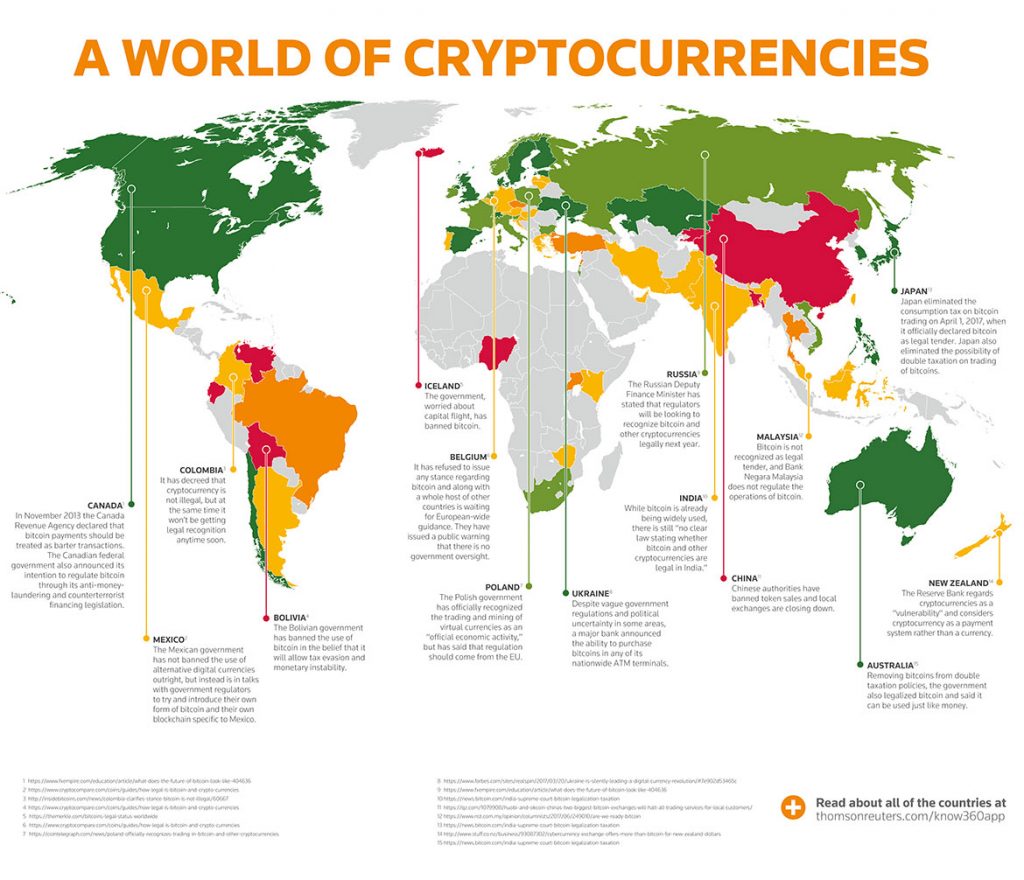
The legal status of cryptocurrencies varies substantially from one jurisdiction to another, and is still undefined or changing in many of them. Whereas, in the majority of countries the usage of cryptocurrency isn't in itself illegal, its status and usability as a means of payment (or a commodity) varies, with differing regulatory implications.
While some states have explicitly allowed its use and trade, others have banned or restricted it. Likewise, various government agencies, departments, and courts have classified cryptocurrencies differently.
Detail by intergovernmental organization
Detail by country or territory
Alphabetical index to classifications
Africa
Northern Africa
Western Africa
East and Central Africa
Southeast Africa
Horn of Africa
Indian Ocean States
Southern Africa
Americas
North America
Central America
Caribbean
South America
Asia
Central Asia
West Asia
South Asia
East Asia
Southeast Asia
Europe
Central Europe
Eastern Europe
Northern Europe
Southern Europe
Western Europe
Oceania
Australasia
Melanesia
Micronesia
Polynesia
See also
- Regulation of algorithms
- Taxation of cryptocurrency splits
- Bitcoin Law
- Anti-bitcoin law protests
Footnotes
References
External links
- Regulation of Bitcoin in Selected Jurisdictions – law.gov