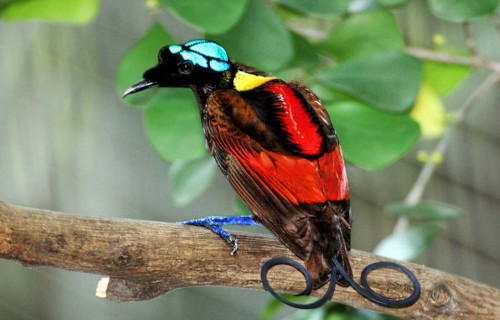
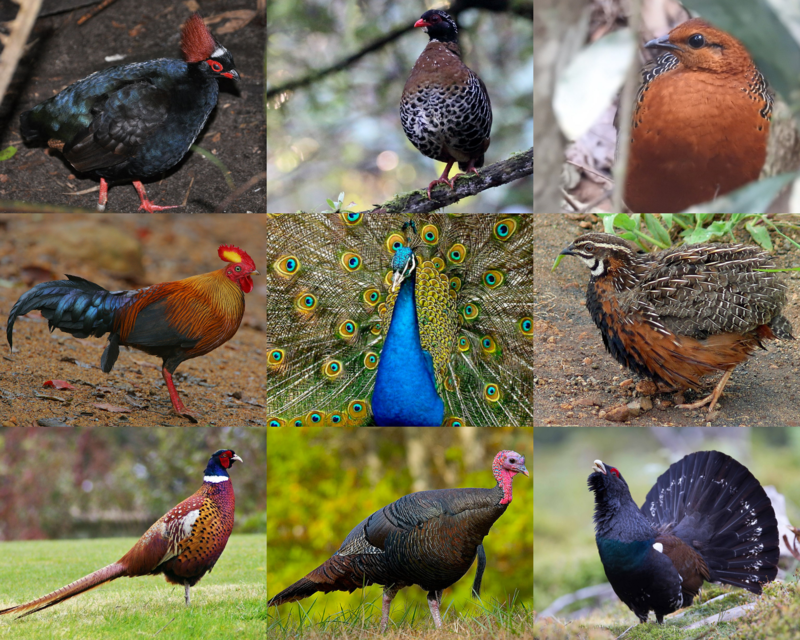
The birds of Asia are diverse. The avifauna of Asia includes 3845 species.
The taxonomy of this list adheres to James Clements's Birds of the World: A Checklist, 2022 edition. Taxonomic changes are on-going. As more research is gathered from studies of distribution, behaviour, and DNA, the order and number of families and species may change. Furthermore, different approaches to ornithological nomenclature have led to concurrent systems of classification (see Sibley-Ahlquist taxonomy).
The area includes Russia east of the Ural River and Ural Mountains and the Russian Arctic islands east of Novaya Zemlya, as well as Kazakhstan, Georgia, Azerbaijan, and Turkey. The area is separated from Africa by the Suez Canal. In the Indian Ocean it includes Sri Lanka, Lakshadweep (the Laccadive Islands), the Andaman and Nicobar Islands. It includes the Russian islands in the Bering Sea and North Pacific, Japan, the Izu Islands, the Ryukyu Islands, Taiwan, the Philippines, Malaysia and Indonesia.
The following tags have been used to highlight several categories. The commonly occurring native species do not fall into any of these categories.
- (A) Accidental – a species that rarely or accidentally occurs in Asia
- (I) Introduced – a species introduced to Asia as a consequence, direct or indirect, of human actions
- (Ex) Extirpated – a species that no longer occurs in Asia although populations exist elsewhere
- (X) Extinct – a species or subspecies that no longer exists.
Ostriches
Order: Struthioniformes Family: Struthionidae
The ostrich is a flightless bird native to Africa. It is the largest living species of bird. It is distinctive in its appearance, with a long neck and legs and the ability to run at high speeds.
- Common ostrich, Struthio camelus
- Arabian ostrich, Struthio camelus syriacus (X)
- North African ostrich, Struthio camelus camelus (I)
Cassowaries and emu
Order: Struthioniformes Family: Casuariidae
The cassowaries are large flightless birds native to Australia and New Guinea.
- Southern cassowary, Casuarius casuarius
- Dwarf cassowary, Casuarius bennetti
- Northern cassowary, Casuarius unappendiculatus
Magpie goose
Order: Anseriformes Family: Anseranatidae
The family contains a single species, the magpie goose. It was an early and distinctive offshoot of the anseriform family tree, diverging after the screamers and before all other ducks, geese and swans, sometime in the late Cretaceous.
- Magpie goose, Anseranas semipalmata
Ducks, geese, and waterfowl
Order: Anseriformes Family: Anatidae
Anatidae includes the ducks and most duck-like waterfowl, such as geese and swans. These birds are adapted to an aquatic existence with webbed feet, flattened bills, and feathers that are excellent at shedding water due to an oily coating.
Megapodes
Order: Galliformes Family: Megapodiidae
The Megapodiidae are stocky, medium-large chicken-like birds with small heads and large feet. All but the malleefowl occupy jungle habitats and most have brown or black colouring.
Guineafowl
Order: Galliformes Family: Numididae
The guineafowl are a family of birds native to Africa. They typically eat insects and seeds, are ground-nesting, and resemble partridges, except with featherless heads.
- Helmeted guineafowl, Numida meleagris (I)
- Vulturine guineafowl, Acryllium vulturinum
New World quail
- Northern bobwhite, Colinus virginianus (I)
Pheasants, grouse, and allies
Order: Galliformes Family: Phasianidae
The Phasianidae are a family of terrestrial birds. In general, they are plump (although they vary in size) and have broad, relatively short wings.
Flamingos
Order: Phoenicopteriformes Family: Phoenicopteridae
Flamingos are gregarious wading birds, usually 3 to 5 feet (0.9 to 1.5 m) tall, found in both the Western and Eastern Hemispheres. Flamingos filter-feed on shellfish and algae. Their oddly shaped beaks are specially adapted to separate mud and silt from the food they consume and, uniquely, are used upside-down.
- Greater flamingo, Phoenicopterus roseus
- Lesser flamingo, Phoeniconaias minor
Grebes
Order: Podicipediformes Family: Podicipedidae
Grebes are small to medium-large freshwater diving birds. They have lobed toes and are excellent swimmers and divers. However, they have their feet placed far back on the body, making them quite ungainly on land.
- Little grebe, Tachybaptus ruficollis
- Australasian grebe, Tachybaptus novaehollandiae
- Horned grebe, Podiceps auritus
- Red-necked grebe, Podiceps grisegena
- Great crested grebe, Podiceps cristatus
- Eared grebe, Podiceps nigricollis
- Hoary-headed grebe, Poliocephalus poliocephalus
- Pied-billed grebe, Podilymbus podiceps
Pigeons and doves
Order: Columbiformes Family: Columbidae
Pigeons and doves are stout-bodied birds with short necks and short slender bills with a fleshy cere.
Sandgrouse
Order: Pterocliformes Family: Pteroclidae
Sandgrouse have small, pigeon like heads and necks, but sturdy compact bodies. They have long pointed wings and sometimes tails and a fast direct flight. Flocks fly to watering holes at dawn and dusk. Their legs are feathered down to the toes.
- Tibetan sandgrouse, Syrrhaptes tibetanus
- Pallas's sandgrouse, Syrrhaptes paradoxus
- Pin-tailed sandgrouse, Pterocles alchata
- Chestnut-bellied sandgrouse, Pterocles exustus
- Spotted sandgrouse, Pterocles senegallus
- Black-bellied sandgrouse, Pterocles orientalis
- Crowned sandgrouse, Pterocles coronatus
- Lichtenstein's sandgrouse, Pterocles lichtensteinii
- Painted sandgrouse, Pterocles indicus
- Four-banded sandgrouse, Pterocles quadricinctus
Bustards
Order: Otidiformes Family: Otididae
Bustards are large terrestrial birds mainly associated with dry open country and steppes in the Old World. They are omnivorous and nest on the ground. They walk steadily on strong legs and big toes, pecking for food as they go. They have long broad wings with "fingered" wingtips and striking patterns in flight. Many have interesting mating displays.
- Great bustard, Otis tarda
- Arabian bustard, Ardeotis arabs
- Great Indian bustard, Ardeotis nigriceps
- Australian bustard, Ardeotis australis
- MacQueen's bustard, Chlamydotis macqueenii
- Houbara bustard, Chalmydotis undulata
- Bengal florican, Houbaropsis bengalensis
- Lesser florican, Sypheotides indicus
- Little bustard, Tetrax tetrax
Cuckoos
Order: Cuculiformes Family: Cuculidae
The family Cuculidae includes cuckoos, roadrunners and anis. These birds are of variable size with slender bodies, long tails and strong legs.
Frogmouths
Order: Caprimulgiformes Family: Podargidae
The frogmouths are a group of nocturnal birds related to the nightjars. They are named for their large flattened hooked bill and huge frog-like gape, which they use to take insects.
- Marbled frogmouth, Podargus ocellatus
- Papuan frogmouth, Podargus papuensis
- Tawny frogmouth, Podargus strigoides
- Large frogmouth, Batrachostomus auritus
- Dulit frogmouth, Batrachostomus harterti
- Philippine frogmouth, Batrachostomus septimus
- Gould's frogmouth, Batrachostomus stellatus
- Sri Lanka frogmouth, Batrachostomus moniliger
- Hodgson's frogmouth, Batrachostomus hodgsoni
- Sumatran frogmouth, Batrachostomus poliolophus
- Bornean frogmouth, Batrachostomus mixtus
- Javan frogmouth, Batrachostomus javensis
- Blyth's frogmouth, Batrachostomus affinis
- Palawan frogmouth, Batrachostomus chaseni
- Sunda frogmouth, Batrachostomus cornutus
- Solomons frogmouth, Rigidipenna inexpectata
Nightjars and allies
Order: Caprimulgiformes Family: Caprimulgidae
Nightjars are medium-sized nocturnal birds that usually nest on the ground. They have long wings, short legs and very short bills. Most have small feet, of little use for walking, and long pointed wings. Their soft plumage is camouflaged to resemble bark or leaves.
Owlet-nightjars
Order: Caprimulgiformes Family: Aegothelidae
The owlet-nightjars are small nocturnal birds related to the nightjars and frogmouths. They are insectivores which hunt mostly in the air. Their soft plumage is a mixture of browns and paler shades.
- Feline owlet-nightjar, Aegotheles insignis
- Starry owlet-nightjar, Aegotheles tatei (A)
- Wallace's owlet-nightjar, Aegotheles wallacii
- Mountain owlet-nightjar, Aegotheles albertisi
- Moluccan owlet-nightjar, Aegotheles crinifrons
- Vogelkop owlet-nightjar, Aegotheles affinis
- Barred owlet-nightjar, Aegotheles bennettii
- Australian owlet-nightjar, Aegotheles cristatus
Swifts
Order: Caprimulgiformes Family: Apodidae
Swifts are small birds which spend the majority of their lives flying. These birds have very short legs and never settle voluntarily on the ground, perching instead only on vertical surfaces. Many swifts have long swept-back wings which resemble a crescent or boomerang.
Treeswifts
Order: Caprimulgiformes Family: Hemiprocnidae
The treeswifts, also called crested swifts, are closely related to the true swifts. They differ from the other swifts in that they have crests, long forked tails and softer plumage.
- Crested treeswift, Hemiprocne coronata
- Gray-rumped treeswift, Hemiprocne longipennis
- Whiskered treeswift, Hemiprocne comata
- Moustached treeswift, Hemiprocne mystacea
Rails, gallinules, and coots
Order: Gruiformes Family: Rallidae
Rallidae is a large family of small to medium-sized birds which includes the rails, crakes, coots and gallinules. Typically they inhabit dense vegetation in damp environments near lakes, swamps or rivers. In general they are shy and secretive birds, making them difficult to observe. Most species have strong legs and long toes which are well adapted to soft uneven surfaces. They tend to have short, rounded wings and to be weak fliers.
Finfoots
Order: Gruiformes Family: Heliornithidae
Heliornithidae is small family of tropical birds with webbed lobes on their feet similar to those of grebes and coots.
- Masked finfoot, Heliopais personatus
Cranes
Order: Gruiformes Family: Gruidae
Cranes are large, long-legged, and long-necked birds. Unlike the similar-looking but unrelated herons, cranes fly with necks outstretched, not pulled back. Most have elaborate and noisy courting displays or "dances".
- Demoiselle crane, Anthropoides virgo
- Siberian crane, Leucogeranus leucogeranus
- Sandhill crane, Antigone canadensis
- Sarus crane, Antigone antigone
- Brolga, Antigone rubicunda
- White-naped crane, Antigone vipio
- Common crane, Grus grus
- Hooded crane, Grus monacha
- Black-necked crane, Grus nigricollis
- Red-crowned crane, Grus japonensis
- Black crowned-crane, Balearica pavonina
Sheathbills
- Black-faced sheathbill, Chionis minor
- Snowy sheathbill, Chionis albus
Thick-knees
Order: Charadriiformes Family: Burhinidae
The thick-knees are found worldwide within the tropical zone, with some species also breeding in temperate Europe and Australia. They are medium to large waders with strong black or yellow-black bills, large yellow eyes, and cryptic plumage. Despite being classed as waders, most species have a preference for arid or semi-arid habitats.
- Eurasian thick-knee, Burhinus oedicnemus
- Indian thick-knee, Burhinus indicus
- Spotted thick-knee, Burhinus capensis
- Bush thick-knee, Burhinus grallarius
- Senegal thick-knee, Burhinus senegalensis
- Peruvian thick-knee, Burhinus superciliaris
- Great thick-knee, Esacus recurvirostris
- Beach thick-knee, Esacus magnirostris
Egyptian plover
Order: Charadriiformes Family: Pluvianidae
The Egyptian plover is found across equatorial Africa and along the Nile River.
- Egyptian plover, Pluvianus aegyptius
Stilts and avocets
Order: Charadriiformes Family: Recurvirostridae
Recurvirostridae is a family of large wading birds, which includes the avocets and stilts. The avocets have long legs and long up-curved bills. The stilts have extremely long legs and long, thin, straight bills.
- Black-winged stilt, Himantopus himantopus
- Pied stilt, Himantopus leucocephalus
- Black-necked stilt, Himantopus mexicanus
- Pied avocet, Recurvirostra avosetta
- Red-necked avocet, Recurvirostra novaehollandiae (A)
- American avocet, Recurvirostra americana
- Banded stilt, Cladorhynchus leucocephalus
Ibisbill
Order: Charadriiformes Family: Ibidorhynchidae
The ibisbill is related to the waders, but is sufficiently distinctive to be a family unto itself. The adult is gray with a white belly, red legs, a long down curved bill, and a black face and breast band.
- Ibisbill, Ibidorhyncha struthersii
Oystercatchers
Order: Charadriiformes Family: Haematopodidae
The oystercatchers are large and noisy plover-like birds, with strong bills used for smashing or prising open molluscs.
- Eurasian oystercatcher, Haematopus ostralegus
- Pied oystercatcher, Haematopus longirostris
- Sooty oystercatcher, Haematopus fuliginosus (A)
- Black oystercatcher, Haematopus bachmani
- South Island oystercatcher, Haematopus finschi
- Canarian oystercatcher, Haematopus meadewaldoi
Plovers and lapwings
Order: Charadriiformes Family: Charadriidae
The family Charadriidae includes the plovers, dotterels and lapwings. They are small to medium-sized birds with compact bodies, short, thick necks and long, usually pointed, wings. They are found in open country worldwide, mostly in habitats near water.
Plains-Wanderer
- Plains-wanderer, Pedionomus torquatus
Painted-snipes
Order: Charadriiformes Family: Rostratulidae
Painted-snipes are short-legged, long-billed birds similar in shape to the true snipes, but more brightly colored.
- Greater painted-snipe, Rostratula benghalensis
Jacanas
Order: Charadriiformes Family: Jacanidae
The jacanas are a group of tropical waders in the family Jacanidae. They are found throughout the tropics. They are identifiable by their huge feet and claws which enable them to walk on floating vegetation in the shallow lakes that are their preferred habitat.
- Comb-crested jacana, Irediparra gallinacea
- Pheasant-tailed jacana, Hydrophasianus chirurgus
- Bronze-winged jacana, Metopidius indicus
Sandpipers and allies
Order: Charadriiformes Family: Scolopacidae
Scolopacidae is a large diverse family of small to medium-sized shorebirds including the sandpipers, curlews, godwits, shanks, tattlers, woodcocks, snipes, dowitchers and phalaropes. The majority of these species eat small invertebrates picked out of the mud or soil. Variation in length of legs and bills enables multiple species to feed in the same habitat, particularly on the coast, without direct competition for food.
Buttonquail
Order: Charadriiformes Family: Turnicidae
The buttonquail are small, drab, running birds which resemble the true quails. The female is the brighter of the sexes and initiates courtship. The male incubates the eggs and tends the young.
- Small buttonquail, Turnix sylvaticus
- Red-backed buttonquail, Turnix maculosus
- Yellow-legged buttonquail, Turnix tanki
- Spotted buttonquail, Turnix ocellatus
- Barred buttonquail, Turnix suscitator
- Luzon buttonquail, Turnix worcesteri
- Sumba buttonquail, Turnix everetti
- Red-chested buttonquail, Turnix pyrrhothorax
- Black-breasted buttonquail, Turnix melanogaster
- Chestnut-backed buttonquail, Turnix castanotus
- Buff-breasted buttonquail, Turnix olivii
- Painted buttonquail, Turnix varius
- Little buttonquail, Turnix velox
Crab plover
Order: Charadriiformes Family: Dromadidae
The crab-plover is related to the waders. It resembles a plover but with very long grey legs and a strong heavy black bill similar to a tern. It has black-and-white plumage, a long neck, partially webbed feet and a bill designed for eating crabs.
- Crab-plover, Dromas ardeola
Pratincoles and coursers
Order: Charadriiformes Family: Glareolidae
Glareolidae is a family of wading birds comprising the pratincoles, which have short legs, long pointed wings and long forked tails, and the coursers, which have long legs, short wings and long, pointed bills which curve downwards.
- Cream-colored courser, Cursorius cursor
- Indian courser, Cursorius coromandelicus
- Temminck's courser, Cursorius temminckii
- Jerdon's courser, Rhinoptilus bitorquatus
- Australian pratincole, Stiltia isabella
- Collared pratincole, Glareola pratincola
- Oriental pratincole, Glareola maldivarum
- Black-winged pratincole, Glareola nordmanni
- Small pratincole, Glareola lactea
- Bronze-winged courser, Rhinoptilus chalcopterus
Skuas and jaegers
Order: Charadriiformes Family: Stercorariidae
The family Stercorariidae are, in general, medium to large birds, typically with gray or brown plumage, often with white markings on the wings. They nest on the ground in temperate and arctic regions and are long-distance migrants.
- Great skua, Stercorarius skua
- South polar skua, Stercorarius maccormicki
- Brown skua, Stercorarius antarcticus
- Pomarine jaeger, Stercorarius pomarinus
- Parasitic jaeger, Stercorarius parasiticus
- Long-tailed jaeger, Stercorarius longicaudus
Auks, murres and puffins
Order: Charadriiformes Family: Alcidae
Alcids are superficially similar to penguins due to their black-and-white colors, their upright posture and some of their habits, however they are not related to the penguins and differ in being able to fly. Auks live on the open sea, only deliberately coming ashore to nest.
Gulls, terns, and skimmers
Order: Charadriiformes Family: Laridae
Laridae is a family of medium to large seabirds, the gulls, terns and skimmers. Gulls are typically gray or white, often with black markings on the head or wings. They have stout, longish bills and webbed feet. Terns are a group of generally medium to large seabirds typically with gray or white plumage, often with black markings on the head. Most terns hunt fish by diving but some pick insects off the surface of fresh water. Terns are generally long-lived birds, with several species known to live in excess of 30 years. Skimmers are a small family of tropical tern-like birds. They have an elongated lower mandible which they use to feed by flying low over the water surface and skimming the water for small fish.
Tropicbirds
Order: Phaethontiformes Family: Phaethontidae
Tropicbirds are slender white birds of tropical oceans, with exceptionally long central tail feathers. Their heads and long wings have black markings.
- White-tailed tropicbird, Phaethon lepturus
- Red-billed tropicbird, Phaethon aethereus
- Red-tailed tropicbird, Phaethon rubricauda
Loons
Order: Gaviiformes Family: Gaviidae
Loons, known as divers in Europe, are a group of aquatic birds found in many parts of North America and northern Europe. They are the size of a large duck or small goose, which they somewhat resemble when swimming, but to which they are completely unrelated.
- Red-throated loon, Gavia stellata
- Arctic loon, Gavia arctica
- Pacific loon, Gavia pacifica
- Common loon, Gavia immer
- Yellow-billed loon, Gavia adamsii
Albatrosses
Order: Procellariiformes Family: Diomedeidae
The albatrosses are among the largest of flying birds, and the great albatrosses from the genus Diomedea have the largest wingspans of any extant birds.
- Yellow-nosed albatross, Thalassarche chlororhynchos
- White-capped albatross, Thalassarche cauta
- Grey-headed albatross, Thalassarche chrysostoma
- Buller's albatross, Thalassarche bulleri
- Salvin's albatross, Thalassarche salvini
- Chatham albatross, Thalassarche eremita
- Campbell albatross, Thalassarche impavida
- Black-browed albatross, Thalassarche melanophris
- Wandering albatross, Diomedea exulans
- Royal albatross, Diomedea epomophora
- Laysan albatross, Phoebastria immutabilis
- Black-footed albatross, Phoebastria nigripes
- Short-tailed albatross, Phoebastria albatrus
- Sooty albatross, Phoebetria fusca
- Light-mantled albatross, Phoebetria palpebrata
Southern storm-petrels
Order: Procellariiformes Family: Oceanitidae
The southern storm-petrels are relatives of the petrels and are the smallest seabirds. They feed on planktonic crustaceans and small fish picked from the surface, typically while hovering.
- Wilson's storm-petrel, Oceanites oceanicus
- White-faced storm-petrel, Pelagodroma marina
- White-bellied storm-petrel, Fregetta grallaria
- Black-bellied storm-petrel, Fregetta tropica
- New Zealand storm-petrel, Fregetta maoriana
- Grey-backed storm-petrel, Garrodia nereis
- Polynesian storm-petrel, Nesofregetta fuliginosa
Northern storm-petrels
Order: Procellariiformes Family: Hydrobatidae
The northern storm-petrels are relatives of the petrels and are the smallest seabirds. They feed on planktonic crustaceans and small fish picked from the surface, typically while hovering. The flight is fluttering and sometimes bat-like.
- European storm-petrel, Hydrobates pelagicus
- Fork-tailed storm-petrel, Hydrobates furcatus
- Leach's storm-petrel, Hydrobates leucorhous
- Swinhoe's storm-petrel, Hydrobates monorhis
- Band-rumped storm-petrel, Hydrobates castro
- Matsudaira's storm-petrel, Hydrobates matsudairae
- Tristram's storm-petrel, Hydrobates tristrami
- Least storm-petrel, Hydrobates microsomus
- Monteiro's storm-petrel, Hydrobates monteroi
- Cape Verde storm-petrel, Hydrobates jabejabe
Shearwaters and petrels
Order: Procellariiformes Family: Procellariidae
The procellariids are the main group of medium-sized "true petrels", characterized by united nostrils with medium septum and a long outer functional primary.
Storks
Order: Ciconiiformes Family: Ciconiidae
Storks are large, long-legged, long-necked, wading birds with long, stout bills. Storks are mute, but bill-clattering is an important mode of communication at the nest. Their nests can be large and may be reused for many years. Many species are migratory.
- Asian openbill, Anastomus oscitans
- African openbill, Anastomus lamelligerus
- Black stork, Ciconia nigra
- Abdim's stork, Ciconia abdimii
- Asian woolly-necked stork, Ciconia episcopus
- Storm's stork, Ciconia stormi
- White stork, Ciconia ciconia
- Oriental stork, Ciconia boyciana
- Black-necked stork, Ephippiorhynchus asiaticus
- Lesser adjutant, Leptoptilos javanicus
- Marabou stork, Leptoptilos crumenifer (A)
- Greater adjutant, Leptoptilos dubius
- Milky stork, Mycteria cinerea
- Yellow-billed stork, Mycteria ibis
- Painted stork, Mycteria leucocephala
- Saddle-billed stork, Ephippiorhynchus senegalensis
Frigatebirds
Order: Suliformes Family: Fregatidae
Frigatebirds are large seabirds usually found over tropical oceans. They are large, black-and-white or completely black, with long wings and deeply forked tails. The males have colored inflatable throat pouches. They do not swim or walk and cannot take off from a flat surface. Having the largest wingspan-to-body-weight ratio of any bird, they are essentially aerial, able to stay aloft for more than a week.
- Lesser frigatebird, Fregata ariel
- Christmas Island frigatebird, Fregata andrewsi
- Great frigatebird, Fregata minor
Boobies and gannets
Order: Suliformes Family: Sulidae
The sulids comprise the gannets and boobies. Both groups are medium to large coastal seabirds that plunge-dive for fish.
- Masked booby, Sula dactylatra
- Nazca booby, Sula granti (A)
- Brown booby, Sula leucogaster
- Red-footed booby, Sula sula
- Abbott's booby, Papasula abbotti
- Northern gannet, Morus bassanus
Anhingas
Order: Suliformes Family: Anhingidae
Anhingas or darters are cormorant-like water birds with long necks and long, straight bills. They are fish eaters which often swim with only their neck above the water.
- Oriental darter, Anhinga melanogaster
- Australasian darter, Anhinga novaehollandiae
- African darter, Anhinga rufa
Cormorants and shags
Order: Suliformes Family: Phalacrocoracidae
Cormorants are medium-to-large aquatic birds, usually with mainly dark plumage and areas of coloured skin on the face. The bill is long, thin and sharply hooked. Their feet are four-toed and webbed, a distinguishing feature among the order Pelecaniformes.
- Little pied cormorant, Microcarbo melanoleucos
- Little cormorant, Microcarbo niger
- Pygmy cormorant, Microcarbo pygmeus
- Long-tailed cormorant, Microcarbo africanus
- Red-faced cormorant, Urile urile
- Pelagic cormorant, Urile pelagicus
- Pallas's cormorant, Urile perspicillatus (X)
- Great cormorant, Phalacrocorax carbo
- Japanese cormorant, Phalacrocorax capillatus
- Socotra cormorant, Phalacrocorax nigrogularis
- Indian cormorant, Phalacrocorax fuscicollis
- Little black cormorant, Phalacrocorax sulcirostris
- Pied cormorant, Phalacrocorax varius
- Spotted shag, Phalacrocorax punctatus
- Black-faced cormorant, Phalacrocorax fuscescens
- European shag, Gulosus aristotelis
- Kerguelen shag, Leucocarbo verrucosus
- Macquarie shag, Leucocarbo purpurascens
- Imperial shag, Leucocarbo atriceps
Pelicans
Order: Pelecaniformes Family: Pelecanidae
Pelicans are large water birds with distinctive pouches under their bills. Like other birds in the order Pelecaniformes, they have four webbed toes.
- Great white pelican, Pelecanus onocrotalus
- Australian pelican, Pelecanus conspicillatus
- Pink-backed pelican, Pelecanus rufescens
- Spot-billed pelican, Pelecanus philippensis
- Dalmatian pelican, Pelecanus crispus
Hamerkop
Order: Pelecaniformes Family: Scopidae
The hamerkop is a medium-sized bird with a long shaggy crest. The shape of its head with a curved bill and crest at the back is reminiscent of a hammer, hence its name. Its plumage is drab-brown all over.
- Hamerkop, Scopus umbretta
Herons, egrets, and bitterns
Order: Pelecaniformes Family: Ardeidae
The family Ardeidae contains the bitterns, herons, and egrets. Herons and egrets are medium to large wading birds with long necks and legs. Bitterns tend to be shorter necked and more wary. Members of Ardeidae fly with their necks retracted, unlike other long-necked birds such as storks, ibises, and spoonbills.
Ibises and spoonbills
Order: Pelecaniformes Family: Threskiornithidae
Threskiornithidae is a family of large terrestrial and wading birds which includes the ibises and spoonbills. They have long, broad wings with 11 primary and about 20 secondary feathers. They are strong fliers and despite their size and weight, very capable soarers.
Osprey
Order: Accipitriformes Family: Pandionidae
The family Pandionidae contains only one species, the osprey. The osprey is a medium-large raptor which is a specialist fish-eater with a worldwide distribution.
- Osprey, Pandion haliaetus
Hawks, eagles, and kites
Order: Accipitriformes Family: Accipitridae
Accipitridae is a family of birds of prey, which includes hawks, eagles, kites, harriers and Old World vultures. These birds have powerful hooked beaks for tearing flesh from their prey, strong legs, powerful talons and keen eyesight.
Barn-owls
Order: Strigiformes Family: Tytonidae
Barn owls are medium to large owls with large heads and characteristic heart-shaped faces. They have long strong legs with powerful talons.
- Sooty owl, Tyto tenebricosa
- Australian masked-owl, Tyto novaehollandiae
- Seram masked-owl, Tyto almae (E)
- Lesser masked-owl, Tyto sororcula
- Taliabu masked-owl, Tyto nigrobrunnea
- Minahassa masked-owl, Tyto inexspectata
- Sulawesi masked-owl, Tyto rosenbergii
- Australasian grass-owl, Tyto longimembris
- Barn owl, Tyto alba (A)
- Andaman masked-owl, Tyto deroepstorffi
- Golden masked-owl, Tyto aurantia
- Manus masked-owl, Tyto manusi
- Oriental bay-owl, Phodilus badius
- Sri Lanka bay-owl, Phodilus assimilis
Owls
Order: Strigiformes Family: Strigidae
The typical owls are small to large solitary nocturnal birds of prey. They have large forward-facing eyes and ears, a hawk-like beak and a conspicuous circle of feathers around each eye called a facial disk.
Trogons
Order: Trogoniformes Family: Trogonidae
The family Trogonidae includes trogons and quetzals. Found in tropical woodlands worldwide, they feed on insects and fruit, and their broad bills and weak legs reflect their diet and arboreal habits. Although their flight is fast, they are reluctant to fly any distance. Trogons have soft, often colorful, feathers with distinctive male and female plumage.
- Javan trogon, Harpactes reinwardtii
- Sumatran trogon, Harpactes mackloti
- Malabar trogon, Harpactes fasciatus
- Red-naped trogon, Harpactes kasumba
- Diard's trogon, Harpactes diardii
- Philippine trogon, Harpactes ardens
- Whitehead's trogon, Harpactes whiteheadi
- Cinnamon-rumped trogon, Harpactes orrhophaeus
- Scarlet-rumped trogon, Harpactes duvaucelii
- Red-headed trogon, Harpactes erythrocephalus
- Orange-breasted trogon, Harpactes oreskios
- Ward's trogon, Harpactes wardi
Hoopoes
Order: Bucerotiformes Family: Upupidae
Hoopoes have black, white and orangey-pink coloring with a long crest on their head, the plumage of which sweeps backward at rest but can be flexed to an erect position.
- Eurasian hoopoe, Upupa epops
Hornbills
Order: Bucerotiformes Family: Bucerotidae
Hornbills are a group of birds whose bill is shaped like a cow's horn, but without a twist, sometimes with a casque on the upper mandible. Frequently, the bill is brightly colored.
Kingfishers
Order: Coraciiformes Family: Alcedinidae
Kingfishers are medium-sized birds with large heads, long, pointed bills, short legs and stubby tails.
Bee-eaters
Order: Coraciiformes Family: Meropidae
The bee-eaters are a group of near passerine birds in the family Meropidae. Most species are found in Africa but others occur in southern Europe, Madagascar, Australia and New Guinea. They are characterized by richly colored plumage, slender bodies and usually elongated central tail feathers. All are colorful and have long downturned bills and pointed wings, which give them a swallow-like appearance when seen from afar.
- Red-bearded bee-eater, Nyctyornis amictus
- Blue-bearded bee-eater, Nyctyornis athertoni
- Purple-bearded bee-eater, Meropogon forsteni
- White-throated bee-eater, Merops albicollis
- Asian green bee-eater, Merops orientalis
- Arabian green bee-eater, Merops cyanophrys
- Blue-throated bee-eater, Merops viridis
- Rufous-crowned bee-eater, Merops americanus
- Blue-cheeked bee-eater, Merops persicus
- Blue-tailed bee-eater, Merops philippinus
- Rainbow bee-eater, Merops ornatus
- European bee-eater, Merops apiaster
- Chestnut-headed bee-eater, Merops leschenaulti
- Somali bee-eater, Merops revoilii
- Madagascar bee-eater, Merops superciliosus (A)
Rollers
Order: Coraciiformes Family: Coraciidae
Rollers resemble crows in size and build, but are more closely related to the kingfishers and bee-eaters. They share the colorful appearance of those groups with blues and browns predominating. The two inner front toes are connected, but the outer toe is not.
- European roller, Coracias garrulus
- Abyssinian roller, Coracias abyssinicus
- Lilac-breasted roller, Coracias caudatus
- Rufous-crowned roller, Coracias noevius
- Indian roller, Coracias benghalensis
- Indochinese roller, Coracias affinis
- Purple-winged roller, Coracias temminckii
- Broad-billed roller, Eurystomus glaucurus
- Dollarbird, Eurystomus orientalis
- Azure roller, Eurystomus azureus
Asian barbets
Order: Piciformes Family: Megalaimidae
The Asian barbets are plump birds, with short necks and large heads. They get their name from the bristles which fringe their heavy bills. Most species are brightly colored.
Honeyguides
Order: Piciformes Family: Indicatoridae
Honeyguides are among the few birds that feed on wax. They are named for the greater honeyguide which leads traditional honey-hunters to bees' nests and, after the hunters have harvested the honey, feeds on the remaining contents of the hive.
- Yellow-rumped honeyguide, Indicator xanthonotus
- Malaysian honeyguide, Indicator archipelagicus
Woodpeckers
Order: Piciformes Family: Picidae
Woodpeckers are small to medium-sized birds with chisel-like beaks, short legs, stiff tails and long tongues used for capturing insects. Some species have feet with two toes pointing forward and two backward, while several species have only three toes. Many woodpeckers have the habit of tapping noisily on tree trunks with their beaks.
Falcons and caracaras
Order: Falconiformes Family: Falconidae
Falconidae is a family of diurnal birds of prey. They differ from hawks, eagles and kites in that they kill with their beaks instead of their talons.
Cockatoos
Order: Psittaciformes Family: Cacatuidae
The cockatoos share many features with other parrots including the characteristic curved beak shape and a zygodactyl foot, with two forward toes and two backwards toes. They differ, however in a number of characteristics, including the often spectacular movable headcrest.
- Palm cockatoo, Probosciger aterrimus
- Little corella, Cacatua sanguinea
- Tanimbar corella, Cacatua goffiniana
- Philippine cockatoo, Cacatua haematuropygia
- Yellow-crested cockatoo, Cacatua sulphurea
- Sulphur-crested cockatoo, Cacatua galerita
- Eleonora cockatoo, Cacatua galerita eleonora
- Salmon-crested cockatoo, Cacatua moluccensis
- White cockatoo, Cacatua alba
Old World parrots
Order: Psittaciformes Family: Psittaculidae
Characteristic features of parrots include a strong curved bill, an upright stance, strong legs, and clawed zygodactyl feet. Many parrots are vividly coloured, and some are multi-coloured. In size they range from 8 cm (3.1 in) to 1 m (3.3 ft) in length. Old World parrots are found from Africa east across south and southeast Asia and Oceania to Australia and New Zealand.
Tyrant flycatchers
- Great kiskadee, Pitangus sulphuratus
- Olive-sided flycatcher, Contopus cooperi
- Eastern wood-pewee, Contopus virnes
- Yellow-bellied flycatcher, Empidonax flaviventris
- Acadian flycatcher, Empidonax virescens
- Alder flycatcher, Empidonax alnorum
- Least flycatcher, Empidonax minimus
- Eastern phoebe, Sayornis phoebe
- Western kingbird, Tyrannus verticalis
- Eastern kingbird, Tyrannus tyrannus
- Fork-tailed flycatcher, Tyrannus savana
African and green broadbills
Order: Passeriformes Family: Calyptomenidae
The African and green broadbills are small, brightly coloured birds which feed on fruit and also take insects in flycatcher fashion, snapping their broad bills. Their habitat is canopies of wet forests.
- Green broadbill, Calyptomena viridis
- Hose's broadbill, Calyptomena hosii
- Whitehead's broadbill, Calyptomena whiteheadi
Asian and Grauer's broadbills
Order: Passeriformes Family: Eurylaimidae
The Asian and Grauer's broadbills are small, brightly colored birds, which feed on fruit and also take insects in flycatcher fashion, snapping their broad bills. Their habitat is canopies of wet forests.
- Black-and-red broadbill, Cymbirhynchus macrorhynchos
- Long-tailed broadbill, Psarisomus dalhousiae
- Silver-breasted broadbill, Serilophus lunatus
- Banded broadbill, Eurylaimus javanicus
- Black-and-yellow broadbill, Eurylaimus ochromalus
- Wattled broadbill, Sarcophanops steerii
- Visayan broadbill, Sarcophanops samarensis
- Dusky broadbill, Corydon sumatranus
Pittas
Order: Passeriformes Family: Pittidae
Pittas are medium-sized stocky passerines with fairly long, strong legs, short tails, and stout bills. Many are brightly coloured. They spend the majority of their time on wet forest floors, eating snails, insects, and similar invertebrate prey.
Bowerbirds
Order: Passeriformes Family: Ptilonorhynchidae
The bowerbirds are small to medium-sized passerine birds. The males notably build a bower to attract a mate. Depending on the species, the bower ranges from a circle of cleared earth with a small pile of twigs in the center to a complex and highly decorated structure of sticks and leaves.
Australasian treecreepers
Order: Passeriformes Family: Climacteridae
The Climacteridae are medium-small, mostly brown-coloured birds with patterning on their underparts. They are endemic to Australia and New Guinea.
- Papuan treecreeper, Cormobates placens
Fairywrens
Order: Passeriformes Family: Maluridae
Maluridae is a family of small, insectivorous passerine birds endemic to Australia and New Guinea. They are socially monogamous and sexually promiscuous, meaning that although they form pairs between one male and one female, each partner will mate with other individuals and even assist in raising the young from such pairings.
- Wallace's fairywren, Sipodotus wallacii
- Orange-crowned fairywren, Clytomyias insignis
- Broad-billed fairywren, Chenorhamphus grayi
- Campbell's fairywren, Chenorhamphus campbelli
- Emperor fairywren, Malurus cyanocephalus
- White-shouldered fairywren, Malurus alboscapulatus
Honeyeaters
Order: Passeriformes Family: Meliphagidae
The honeyeaters are a large and diverse family of small to medium-sized birds most common in Australia and New Guinea. They are nectar feeders and closely resemble other nectar-feeding passerines.
Thornbills and allies
Order: Passeriformes Family: Acanthizidae
The Acanthizidae are small- to medium-sized birds with short rounded wings, slender bills, long legs, and a short tail. The golden-bellied gerygone is the only member of the family found in mainland Asia.
Pseudo-babblers
Order: Passeriformes Family: Pomatostomidae
The pseudo-babblers are small to medium-sized birds endemic to Australia and New Guinea. They are ground-feeding omnivores and highly social.
- Papuan babbler, Pomatostomus isidorei
- Gray-crowned babbler, Pomatostomus temporalis
Logrunners
Order: Passeriformes Family: Orthonychidae
The Orthonychidae is a family of birds with a single genus, Orthonyx, which comprises two types of passerine birds endemic to Australia and New Guinea, the logrunners and the chowchilla. Both use stiffened tails to brace themselves when feeding.
- Papuan logrunner, Orthonyx novaeguineae
Quail-thrushes and jewel-babblers
Order: Passeriformes Family: Cinclosomatidae
The Cinclosomatidae is a family containing jewel-babblers and quail-thrushes.
- Painted quail-thrush, Cinclosoma ajax
- Spotted jewel-babbler, Ptilorrhoa leucosticta
- Blue jewel-babbler, Ptilorrhoa caerulescens
- Chestnut-backed jewel-babbler, Ptilorrhoa castanonota
- Dimorphic jewel-babbler, Ptilorrhoa geislerorum
Cuckooshrikes
Order: Passeriformes Family: Campephagidae
The cuckooshrikes are small to medium-sized passerine birds. They are predominantly greyish with white and black, although some minivet species are brightly coloured.
Sittellas
Order: Passeriformes Family: Neosittidae
The sittellas are a family of small passerine birds. They resemble treecreepers, but have soft tails.
- Black sittella, Daphoenositta miranda
- Papuan sittella, Daphoenositta papuensis
- Varied sittella, Daphoenositta chrysoptera
Whipbirds and wedgebills
Order: Passeriformes Family: Psophodidae
The Psophodidae is a family containing whipbirds and wedgebills.
- Papuan whipbird, Androphobus viridis
Ploughbill
Order: Passeriformes Family: Eulacestomidae
The wattled ploughbill was long thought to be related to the whistlers (Pachycephalidae), and shriketits (formerly Pachycephalidae, now often treated as its own family).
- Wattled ploughbill, Eulacestoma nigropectus
Australo-Papuan bellbirds
Order: Passeriformes Family: Oreoicidae
The three species contained in the family have been moved around between different families for fifty years. A series of studies of the DNA of Australian birds between 2006 and 2001 found strong support for treating the three genera as a new family, which was formally named in 2016.
- Rufous-naped bellbird, Aleadryas rufinucha
- Piping bellbird, Ornorectes cristatus
Tit berrypecker and crested berrypecker
Order: Passeriformes Family: Paramythiidae
Paramythiidae is a very small bird family restricted to the mountain forests of New Guinea. The two species are colourful medium-sized birds which feed on fruit and some insects.
- Tit berrypecker, Oreocharis arfaki
- Crested berrypecker, Paramythia montium
Vireos, shrike-babblers, and erpornis
Order: Passeriformes Family: Vireonidae
Most of the members of this family are found in the New World. However, the shrike-babblers and erpornis, which only slightly resemble the "true" vireos and greenlets, are found in South East Asia.
- Black-headed shrike-babbler, Pteruthius rufiventer
- Pied shrike-babbler, Pteruthius flaviscapis
- White-browed shrike-babbler, Pteruthius aeralatus
- Green shrike-babbler, Pteruthius xanthochlorus
- Black-eared shrike-babbler, Pteruthius melanotis
- Trilling shrike-babbler, Pteruthius aenobarbus
- Clicking shrike-babbler, Pteruthius intermedius
- White-bellied erpornis, Erpornis zantholeuca
Whistlers and allies
Order: Passeriformes Family: Pachycephalidae
The family Pachycephalidae includes the whistlers, shrikethrushes, and some of the pitohuis.
Old World orioles
Order: Passeriformes Family: Oriolidae
The Old World orioles are colourful passerine birds which are not closely related to the New World orioles.
Boatbills
Order: Passeriformes Family: Machaerirhynchidae
The boatbills have affinities to woodswallows and butcherbirds, and are distributed across New Guinea and northern Queensland.
- Black-breasted boatbill, Machaerirhynchus nigripectus
- Yellow-breasted boatbill, Machaerirhynchus flaviventer
Woodswallows, bellmagpies and allies
Order: Passeriformes Family: Artamidae
The woodswallows are soft-plumaged, somber-coloured passerine birds. They are smooth, agile flyers with moderately large, semi-triangular wings. The cracticids: currawongs, bellmagpies and butcherbirds, are similar to the other corvids. They have large, straight bills and mostly black, white or grey plumage. All are omnivorous to some degree.
- Ashy woodswallow, Artamus fuscus
- Ivory-backed woodswallow, Artamus monachus
- Great woodswallow, Artamus maximus
- White-breasted woodswallow, Artamus leucorynchus
- Black-faced woodswallow, Artamus cinereus
- Fiji woodswallow, Artamus mentalis
- Mountain peltops, Peltops montanus
- Lowland peltops, Peltops blainvillii
- Black-backed butcherbird, Cracticus mentalis
- Hooded butcherbird, Cracticus cassicus
- Tagula butcherbird, Cracticus louisiadensis
- Black butcherbird, Cracticus quoyi
- Australian magpie, Gymnorhina tibicen
Mottled berryhunter
Order: Passeriformes Family: Rhagologidae
The mottled berryhunter or mottled whistler (Rhagologus leucostigma) is a species of bird whose relationships are unclear but most likely related to the woodswallows, boatbills and butcherbirds.
- Mottled berryhunter, Rhagologus leucostigma
Vangas, helmetshrikes, and allies
Order: Passeriformes Family: Vangidae
The family Vangidae is highly variable, though most members of it resemble true shrikes to some degree.
- Malabar woodshrike, Tephrodornis sylvicola
- Large woodshrike, Tephrodornis gularis
- Common woodshrike, Tephrodornis pondicerianus
- Sri Lanka woodshrike, Tephrodornis affinis
- Bar-winged flycatcher-shrike, Hemipus picatus
- Black-winged flycatcher-shrike, Hemipus hirundinaceus
- Rufous-winged philentoma, Philentoma pyrhoptera
- Maroon-breasted philentoma, Philentoma velata
Ioras
Order: Passeriformes Family: Aegithinidae
The ioras are bulbul-like birds of open forest or thorn scrub, but whereas that group tends to be drab in colouration, ioras are sexually dimorphic, with the males being brightly plumaged in yellows and greens.
- Common iora, Aegithina tiphia
- White-tailed iora, Aegithina nigrolutea
- Green iora, Aegithina viridissima
- Great iora, Aegithina lafresnayei
Bristlehead
Order: Passeriformes Family: Pityriasidae
The Bornean bristlehead (Pityriasis gymnocephala), also variously known as the bristled shrike, bald-headed crow or the bald-headed wood-shrike, is the only member of the passerine family Pityriasidae and genus Pityriasis. It is an enigmatic and uncommon species of the rainforest canopy of the island of Borneo, to which it is endemic.
- Bornean bristlehead, Pityriasis gymnocephala
Bushshrikes and allies
Order: Passeriformes Family: Malaconotidae
Bushshrikes are similar in habits to shrikes, hunting insects and other small prey from a perch on a bush. Although similar in build to the shrikes, these tend to be either colourful species or largely black; some species are quite secretive.
- Black-crowned tchagra, Tchagra senegalus
- Rosy-patched bushshrike, Rhodophoneus cruentus
Fantails
Order: Passeriformes Family: Rhipiduridae
The fantails are small insectivorous birds with longish, frequently fanned, tails.
Drongos
Order: Passeriformes Family: Dicruridae
The drongos are mostly black or dark grey in colour, sometimes with metallic tints. They have long forked tails, and some Asian species have elaborate tail decorations. They have short legs and sit very upright when perched, like a shrike. They flycatch or take prey from the ground.
Birds-of-paradise
Order: Passeriformes Family: Paradisaeidae
The birds-of-paradise are best known for the striking plumage possessed by the males of most species, in particular highly elongated and elaborate feathers extending from the tail, wings or head. These plumes are used in courtship displays to attract females.
Ifrita
Order: Passeriformes Family: Ifritidae
The ifritas are a small and insectivorous passerine currently placed in the monotypic family, Ifritidae. Previously, the ifrit has been placed in a plethora of families including Cinclosomatidae or Monarchidae. They are considered an ancient relic species endemic to New Guinea.
- Blue-capped ifrita, Ifrita kowaldi
Monarch flycatchers
Order: Passeriformes Family: Monarchidae
The monarch flycatchers are small to medium-sized insectivorous passerines which hunt by gleaning, hovering or flycatching.
Melampittas
Order: Passeriformes Family: Melampittidae
They are little studied and before being established as a family in 2014 their taxonomic relationships with other birds were uncertain, being considered at one time related variously to the pittas, Old World babblers and birds-of-paradise.
- Lesser melampitta, Melampitta lugubris
- Greater melampitta, Melampitta gigantea
Crested shrikejay
Order: Passeriformes Family: Platylophidae
Until 2018 this species was included in family Corvidae, but genetic and morphological evidence place it in its own family.
- Crested shrikejay, Platylophus galericulatus
Shrikes
Order: Passeriformes Family: Laniidae
Shrikes are passerine birds known for the habit of some species of catching other birds and small animals and impaling the uneaten portions of their bodies on thorns. A shrike's beak is hooked, like that of a typical bird of prey.
Crows, jays, and magpies
Order: Passeriformes Family: Corvidae
The family Corvidae includes crows, ravens, jays, choughs, magpies, treepies, nutcrackers, and ground jays. Corvids are above average in size among the Passeriformes, and some of the larger species show high levels of intelligence.
Satinbirds
Order: Passeriformes Family: Cnemophilidae
They are a family of passerine birds which consists of four species found in the mountain forests of New Guinea. They were originally thought to be part of the birds-of-paradise family Paradisaeidae until genetic research suggested that the birds are not closely related to birds-of-paradise at all and are perhaps closer to berry peckers and longbills (Melanocharitidae). The current evidence suggests that their closest relatives may be the cuckoo-shrikes (Campephagidae).
- Loria's satinbird, Cnemophilus loriae
- Crested satinbird, Cnemophilus macgregorii
- Yellow-breasted satinbird, Loboparadisea sericea
Berrypeckers and longbills
Order: Passeriformes Family: Melanocharitidae
The Melanocharitidae are medium-sized birds which feed on fruit and some insects and other invertebrates. They have drab plumage in greys, browns or black and white. The berrypeckers resemble stout short-billed honeyeaters, and the longbills are like drab sunbirds.
- Obscure berrypecker, Melanocharis arfakiana
- Black berrypecker, Melanocharis nigra
- Mid-mountain berrypecker, Melanocharis longicauda
- Fan-tailed berrypecker, Melanocharis versteri
- Satin berrypecker, Melanocharis citreola
- Streaked berrypecker, Melanocharis striativentris
- Spotted berrypecker, Melanocharis crassirostris
- Yellow-bellied longbill, Toxorhamphus novaeguineae
- Slaty-chinned longbill, Toxorhamphus poliopterus
- Spectacled longbill, Oedistoma iliolophus
- Pygmy longbill, Oedistoma pygmaeum
Australasian robins
Order: Passeriformes Family: Petroicidae
Most species of Petroicidae have a stocky build with a large rounded head, a short straight bill and rounded wingtips. They occupy a wide range of wooded habitats, from subalpine to tropical rainforest, and mangrove swamp to semi-arid scrubland. All are primarily insectivores, although a few supplement their diet with seeds.
Rail-babbler
Order: Passeriformes Family: Eupetidae
The Malaysian rail-babbler is a rail-like passerine bird which inhabits the floor of primary forest in the Malay Peninsula and Sumatra. It is the only member of its family.
- Malaysian rail-babbler, Eupetes macrocerus
Fairy flycatchers
Order: Passeriformes Family: Stenostiridae
Most of the species of this small family are found in Africa, though a few inhabit tropical Asia. They are not closely related to other birds called "flycatchers".
- Yellow-bellied fairy-fantail, Chelidorhynx hypoxanthus
- Gray-headed canary-flycatcher, Culicicapa ceylonensis
- Citrine canary-flycatcher, Culicicapa helianthea
Tits, chickadees, and titmice
Order: Passeriformes Family: Paridae
The Paridae are mainly small stocky woodland species with short stout bills. Some have crests. They are adaptable birds, with a mixed diet including seeds and insects.
Penduline-tits
Order: Passeriformes Family: Remizidae
The penduline-tits are a group of small passerine birds related to the true tits. They are insectivores.
- Eurasian penduline-tit, Remiz pendulinus
- Black-headed penduline-tit, Remiz macronyx
- White-crowned penduline-tit, Remiz coronatus
- Chinese penduline-tit, Remiz consobrinus
Larks
Order: Passeriformes Family: Alaudidae
Larks are small terrestrial birds with often extravagant songs and display flights. Most larks are fairly dull in appearance. Their food is insects and seeds.
Bearded reedling
Order: Passeriformes Family: Panuridae
This species, the only one in its family, is found in reed beds throughout temperate Europe and Asia.
- Bearded reedling, Panurus biarmicus
Cisticolas and allies
Order: Passeriformes Family: Cisticolidae
The Cisticolidae are warblers found mainly in warmer southern regions of the Old World. They are generally very small birds of drab brown or gray appearance found in open country such as grassland or scrub.
Reed warblers and allies
Order: Passeriformes Family: Acrocephalidae
The members of this family are usually rather large for "warblers". Most are rather plain olivaceous brown above with much yellow to beige below. They are usually found in open woodland, reedbeds, or tall grass. The family occurs mostly in southern to western Eurasia and surroundings, but it also ranges far into the Pacific, with some species in Africa.
Grassbirds and allies
Order: Passeriformes Family: Locustellidae
Locustellidae are a family of small insectivorous songbirds found mainly in Eurasia, Africa, and the Australian region. They are smallish birds with tails that are usually long and pointed, and tend to be drab brownish or buffy all over.
Cupwings
Order: Passeriformes Family: Pnoepygidae
The members of this small family are found in mountainous parts of South and South East Asia.
- Scaly-breasted cupwing, Pnoepyga albiventer
- Taiwan cupwing, Pnoepyga formosana
- Immaculate cupwing, Pnoepyga immaculata
- Pygmy cupwing, Pnoepyga pusilla
Swallows
Order: Passeriformes Family: Hirundinidae
The family Hirundinidae is adapted to aerial feeding. They have a slender streamlined body, long pointed wings, and a short bill with a wide gape. The feet are adapted to perching rather than walking, and the front toes are partially joined at the base.
Bulbuls
Order: Passeriformes Family: Pycnonotidae
Bulbuls are medium-sized songbirds. Some are colourful with yellow, red, or orange vents, cheeks, throats, or supercilia, but most are drab, with uniform olive-brown to black plumage. Some species have distinct crests.
Leaf warblers
Order: Passeriformes Family: Phylloscopidae
Leaf warblers are a family of small insectivorous birds found mostly in Eurasia and ranging into Wallacea and Africa. The species are of various sizes, often green-plumaged above and yellow below, or more subdued with greyish-green to greyish-brown colours.
Bush warblers and allies
Order: Passeriformes Family: Scotocercidae
The members of this family are found throughout Africa, Asia, and Polynesia. Their taxonomy is in flux, and some authorities place some genera in other families.
Long-tailed tits
Order: Passeriformes Family: Aegithalidae
Long-tailed tits are a group of small passerine birds with medium to long tails. They make woven bag nests in trees. Most eat a mixed diet which includes insects.
- White-browed tit-warbler, Leptopoecile sophiae
- Crested tit-warbler, Leptopoecile elegans
- Long-tailed tit, Aegithalos caudatus
- Silver-throated tit, Aegithalos glaucogularis
- White-cheeked tit, Aegithalos leucogenys
- Black-throated tit, Aegithalos concinnus
- White-throated tit, Aegithalos niveogularis
- Black-browed tit, Aegithalos iouschistos
- Sooty tit, Aegithalos fuliginosus
- Pygmy tit, Psaltria exilis
Sylviid warblers, parrotbills, and allies
Order: Passeriformes Family: Sylviidae
The family Sylviidae is a group of small insectivorous passerine birds. They mainly occur as breeding species, as the common name implies, in Europe, Asia and, to a lesser extent, Africa. Most are of generally undistinguished appearance, but many have distinctive songs.
White-eyes, yuhinas, and allies
Order: Passeriformes Family: Zosteropidae
The white-eyes are small birds of rather drab appearance, the plumage above being typically greenish-olive, but some species have a white or bright yellow throat, breast, or lower parts, and several have buff flanks. As the name suggests, many species have a white ring around each eyes.
Tree-babblers, scimitar-babblers, and allies
Order: Passeriformes Family: Timaliidae
The members of this family are somewhat diverse in size and colouration, but are characterised by soft fluffy plumage.
Ground babblers and allies
Order: Passeriformes Family: Pellorneidae
These small to medium-sized songbirds have soft fluffy plumage but are otherwise rather diverse. Members of the genus Illadopsis are found in forests, but some other genera are birds of scrublands.
Laughingthrushes and allies
Order: Passeriformes Family: Leiothrichidae
The members of this family are diverse in size and colouration, though those of genus Turdoides tend to be brown or greyish. The family is found in Africa, India, and southeast Asia.
Kinglets
Order: Passeriformes Family: Regulidae
The kinglets, also called crests, are a small group of birds often included in the Old World warblers, but frequently given family status because they also resemble the titmice.
- Ruby-crowned kinglet, Corthylio calendula
- Goldcrest, Regulus regulus
- Flamecrest, Regulus goodfellowi
- Common firecrest, Regulus ignicapilla
- Madeira firecrest, Regulus madeirensis
Wallcreeper
Order: Passeriformes Family: Tichodromidae
The wallcreeper is a small bird, with stunning crimson, gray and black plumage, related to the nuthatch family.
- Wallcreeper, Tichodroma muraria
Nuthatches
Order: Passeriformes Family: Sittidae
Nuthatches are small woodland birds. They have the unusual ability to climb down trees head first, unlike other birds which can only go upwards. Nuthatches have big heads, short tails and powerful bills and feet.
Treecreepers
Order: Passeriformes Family: Certhiidae
Treecreepers are small woodland birds, brown above and white below. They have thin pointed down-curved bills, which they use to extricate insects from bark. They have stiff tail feathers, like woodpeckers, which they use to support themselves on vertical trees.
- Eurasian treecreeper, Certhia familiaris
- Hodgson's treecreeper, Certhia hodgsoni
- Sichuan treecreeper, Certhia tianquanensis
- Short-toed treecreeper, Certhia brachydactyla
- Bar-tailed treecreeper, Certhia himalayana
- Rusty-flanked treecreeper, Certhia nipalensis
- Sikkim treecreeper, Certhia discolor
- Hume's treecreeper, Certhia manipurensis
Spotted creepers
Order: Passeriformes Family: Salpornithidae
Spotted creepers are similar to the treecreepers of Certhiidae but lack the characteristic stiffened tail feathers. They build cup nests joined together with spider webs and decorated with lichen.
- Indian spotted creeper, Salpornis spilonota
Wrens
Order: Passeriformes Family: Troglodytidae
The wrens are mainly small and inconspicuous except for their loud songs. These birds have short wings and thin down-turned bills. Several species often hold their tails upright. All are insectivorous.
- Eurasian wren, Troglodytes troglodytes
- Pacific wren, Troglodytes pacificus
- Winter wren, Troglodytes hiemalis
- Marsh wren, Cistothorus palustris
Spotted elachura
Order: Passeriformes Family: Elachuridae
This species, the only one in its family, inhabits forest undergrowth throughout South East Asia.
- Spotted elachura, Elachura formosa
Dippers
Order: Passeriformes Family: Cinclidae
Dippers are a group of perching birds whose habitat includes aquatic environments in the Americas, Europe and Asia. They are named for their bobbing or dipping movements.
- White-throated dipper, Cinclus cinclus
- Brown dipper, Cinclus pallasii
Oxpeckers
- Red-billed oxpecker, Buphagus erythrorhynchus (A)
Starlings
Order: Passeriformes Family: Sturnidae
Starlings are small to medium-sized passerine birds. Their flight is strong and direct and they are very gregarious. Their preferred habitat is fairly open country. They eat insects and fruit. Plumage is typically dark with a metallic sheen.
Mimids
- Gray catbird, Dumetella carolinensis
- Brown thrasher, Toxostoma rufum
- Tropical mockingbird, Mimus gilvus
Thrushes and allies
Order: Passeriformes Family: Turdidae
The thrushes are a group of passerine birds that occur mainly in the Old World. They are plump, soft plumaged, small to medium-sized insectivores or sometimes omnivores, often feeding on the ground. Many have attractive songs.
Old World flycatchers
Order: Passeriformes Family: Muscicapidae
Old World flycatchers are a large group of small arboreal insectivores. The appearance of these birds is highly varied, but they mostly have weak songs and harsh calls.
Waxwings
Order: Passeriformes Family: Bombycillidae
The waxwings are a group of birds with soft silky plumage and unique red tips to some of the wing feathers. In the Bohemian and cedar waxwings, these tips look like sealing wax and give the group its name. These are arboreal birds of northern forests. They live on insects in summer and berries in winter.
- Bohemian waxwing, Bombycilla garrulus
- Japanese waxwing, Bombycilla japonica
Hylocitrea
Order: Passeriformes Family: Hylocitreidae
The hylocitrea (Hylocitrea bonensis), also known as the yellow-flanked whistler or olive-flanked whistler, is a species of bird that is endemic to montane forests on the Indonesian island of Sulawesi.
- Hylocitrea, Hylocitrea bonensis
Hypocolius
Order: Passeriformes Family: Hypocoliidae
The hypocolius is a small Middle Eastern species. They are mainly a uniform grey colour except the males have a black triangular mask around their eyes.
- Hypocolius, Hypocolius ampelinus
Flowerpeckers
Order: Passeriformes Family: Dicaeidae
The flowerpeckers are very small, stout, often brightly coloured birds, with short tails, short thick curved bills, and tubular tongues.
Sunbirds and spiderhunters
Order: Passeriformes Family: Nectariniidae
The sunbirds and spiderhunters are very small passerine birds which feed largely on nectar, although they will also take insects, especially when feeding young. Their flight is fast and direct on short wings. Most species can take nectar by hovering like a hummingbird, but usually perch to feed.
Fairy-bluebirds
Order: Passeriformes Family: Irenidae
The fairy-bluebirds are bulbul-like birds of open forest or thorn scrub. The males are dark-blue and the females a duller green.
- Asian fairy-bluebird, Irena puella
- Philippine fairy-bluebird, Irena cyanogastra
Leafbirds
Order: Passeriformes Family: Chloropseidae
The leafbirds are small, bulbul-like birds. The males are brightly plumaged, usually in greens and yellows.
- Philippine leafbird, Chloropsis flavipennis
- Yellow-throated leafbird, Chloropsis palawanensis
- Greater green leafbird, Chloropsis sonnerati
- Lesser green leafbird, Chloropsis cyanopogon
- Blue-winged leafbird, Chloropsis cochinchinensis
- Bornean leafbird, Chloropsis kinabaluensis
- Jerdon's leafbird, Chloropsis jerdoni
- Golden-fronted leafbird, Chloropsis aurifrons
- Sumatran leafbird, Chloropsis media
- Orange-bellied leafbird, Chloropsis hardwickii
- Blue-masked leafbird, Chloropsis venusta
Pinktails
Order: Passeriformes Family: Urocynchramidae
Przevalski's pinktail is an unusual passerine bird endemic to the mountains of central-west China.
- Przevalski's pinktail, Urocynchramus pylzowi
Weavers and allies
Order: Passeriformes Family: Ploceidae
The weavers are small passerine birds related to the finches. They are seed-eating birds with rounded conical bills. The males of many species are brightly colored, usually in red or yellow and black, some species show variation in color only in the breeding season.
- Lesser masked-weaver, Ploceus intermedius (I)
- Rüppell's weaver, Ploceus galbula
- Golden-backed weaver, Ploceus jacksoni (I)
- Streaked weaver, Ploceus manyar
- Baya weaver, Ploceus philippinus
- Asian golden weaver, Ploceus hypoxanthus
- Finn's weaver, Ploceus megarhynchus
- Black-breasted weaver, Ploceus benghalensis
- Red fody, Foudia madagascariensis (I)
- Southern masked-weaver, Ploceus velatus
- Village weaver, Ploceus cucullatus
- Taveta golden-weaver, Ploceus castaneiceps
- Chestnut weaver, Ploceus rubiginosus
- Black-headed weaver, Ploceus melanocephalus
- African golden-weaver, Ploceus subaureus
- Northern red bishop, Euplectes franciscanus (I)
- Yellow-crowned bishop, Euplectes afer (I)
- Southern red bishop, Euplectes orix
- Black-winged bishop, Euplectes hordeaceus
- White-winged widowbird, Euplectes albonotatus
- Zanzibar red bishop, Euplectes nigroventris
- Red-collared widowbird, Euplectes ardens
- Fire-fronted bishop, Euplectes diadematus
- Long-tailed widowbird, Euplectes progne
- Red-billed Quelea, Quelea quelea
- Red-headed Quelea, Quelea erythrops
- White-headed Buffalo-weaver, Dinemellia dinemelli
Waxbills and allies
Order: Passeriformes Family: Estrildidae
The estrildid finches are small passerine birds of the Old World tropics and Australasia. They are gregarious and often colonial seed eaters with short thick but pointed bills. They are all similar in structure and habits, but have a wide variation in plumage colors and patterns.
Accentors
Order: Passeriformes Family: Prunellidae
The accentors are in the only bird family, Prunellidae, which is completely endemic to the Palearctic. They are small, fairly drab species superficially similar to sparrows.
- Alpine accentor, Prunella collaris
- Altai accentor, Prunella himalayana
- Robin accentor, Prunella rubeculoides
- Rufous-breasted accentor, Prunella strophiata
- Siberian accentor, Prunella montanella
- Radde's accentor, Prunella ocularis
- Brown accentor, Prunella fulvescens
- Black-throated accentor, Prunella atrogularis
- Mongolian accentor, Prunella koslowi
- Dunnock, Prunella modularis
- Japanese accentor, Prunella rubida
- Maroon-backed accentor, Prunella immaculata
Old World sparrows
Order: Passeriformes Family: Passeridae
Old World sparrows are small passerine birds. In general, sparrows tend to be small, plump, brown or gray birds with short tails and short powerful beaks. Sparrows are seed eaters, but they also consume small insects.
Wagtails and pipits
Order: Passeriformes Family: Motacillidae
Motacillidae is a family of small passerine birds with medium to long tails. They include the wagtails, longclaws and pipits. They are slender, ground feeding insectivores of open country.
Finches, euphonias, and allies
Order: Passeriformes Family: Fringillidae
Finches are seed-eating passerine birds, that are small to moderately large and have a strong beak, usually conical and in some species very large. All have twelve tail feathers and nine primaries. These birds have a bouncing flight with alternating bouts of flapping and gliding on closed wings, and most sing well.
Longspurs and snow buntings
Order: Passeriformes Family: Calcariidae
The Calcariidae are a group of passerine birds which had been traditionally grouped with the New World sparrows, but differ in a number of respects and are usually found in open grassy areas.
- Lapland longspur, Calcarius lapponicus
- Snow bunting, Plectrophenax nivalis
Old World buntings
Order: Passeriformes Family: Emberizidae
The emberizids are a large family of passerine birds. They are seed-eating birds with distinctively shaped bills. Many emberizid species have distinctive head patterns.
New World sparrows
Order: Passeriformes Family: Passerellidae
Until 2017, these species were considered part of the family Emberizidae. Most of the species are known as sparrows, but these birds are not closely related to the Old World sparrows which are in the family Passeridae. Many of these have distinctive head patterns.
- Chipping sparrow, Spizella passerina
- American tree sparrow, Spizelloides arborea (A)
- Fox sparrow, Passerella iliaca
- White-crowned sparrow, Zonotrichia leucophrys (A)
- Golden-crowned sparrow, Zonotrichia atricapilla
- White-throated sparrow, Zonotrichia albicollis
- Rufous-collared sparrow, Zonotrichia capensis
- Savannah sparrow, Passerculus sandwichensis
Troupials and allies
Order: Passeriformes Family: Icteridae
The icterids are a group of small to medium-sized, often colourful, passerine birds restricted to the New World and include the grackles, New World blackbirds and New World orioles. Most species have black as the predominant plumage colour, often enlivened by yellow, orange or red.
- Rusty blackbird, Euphagus carolinus (A)
New World warblers
Order: Passeriformes Family: Parulidae
The New World warblers are a group of small, often colourful, passerine birds restricted to the New World. Most are arboreal, but some are terrestrial. Most members of this family are insectivores.
- Northern waterthrush, Parkesia noveboracensis (A)
Tanagers and allies
Order: Passeriformes Family: Thraupidae
The tanagers are a large group of small to medium-sized passerine birds restricted to the New World, mainly in the tropics. Many species are brightly colored. As a family they are omnivorous, but individual species specialize in eating fruits, seeds, insects, or other types of food. Most have short, rounded wings.
- Red-crested cardinal, Paroaria coronata (I)
See also
- List of birds
- Lists of birds by region
References
- Lepage, Denis. "Checklist of Birds of Asia". Bird Checklists of the World. Avibase. Retrieved 17 May 2020.
- Clements, James F. (July 2005). Birds of the World: A Checklist fifth edition and supplements. Ibis Publishing. ISBN 0-934797-16-1.
- ^ Description of the ABA Listing Areas and Regions from the American Birding Association.
- Collinson, Martin (June 2006). "Splitting headaches? Recent taxonomic changes affecting the British and Western Palaearctic lists". British Birds. 99: 306–323.
- Dickinson, E. C. et al. "Systematic notes on Asian Birds". Zoologische Verhandelingen. vols. 331 (2000), 335 (2001), 340 (2002), 344 (2003), 350 (2004) and Zoologische Mededelingen. vols. 80-4 & 80-5 (2006) [1]